Parallel Lines
Multiple production lines can operate together in some manufacturing configurations. In such scenarios, viewing Key Performance Indicators (KPIs), such as Overall Equipment Effectiveness (OEE), across all participating lines becomes important.
Each production line executes a separate production run, however, production orders are related by a common production order reference.
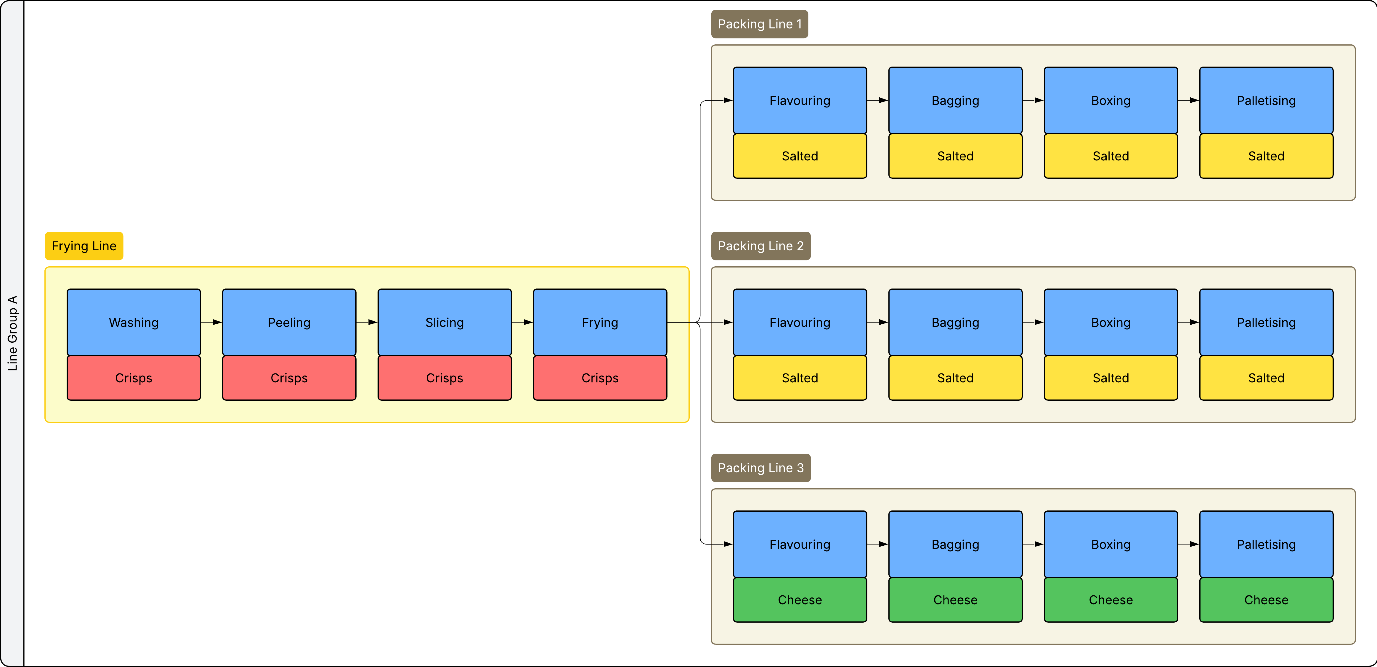
For example, in a crisp production factory, the setup includes:
- A single frying line, which:
- Wash the potatoes
- Peel the potatoes
- Slice the potatoes
- Fries the potatoes, creating crisps.
- Multiple packing lines, each of which:
- Flavor the crisps
- Bag the crisps
- Pack the bags in boxes
- Palletize the boxes
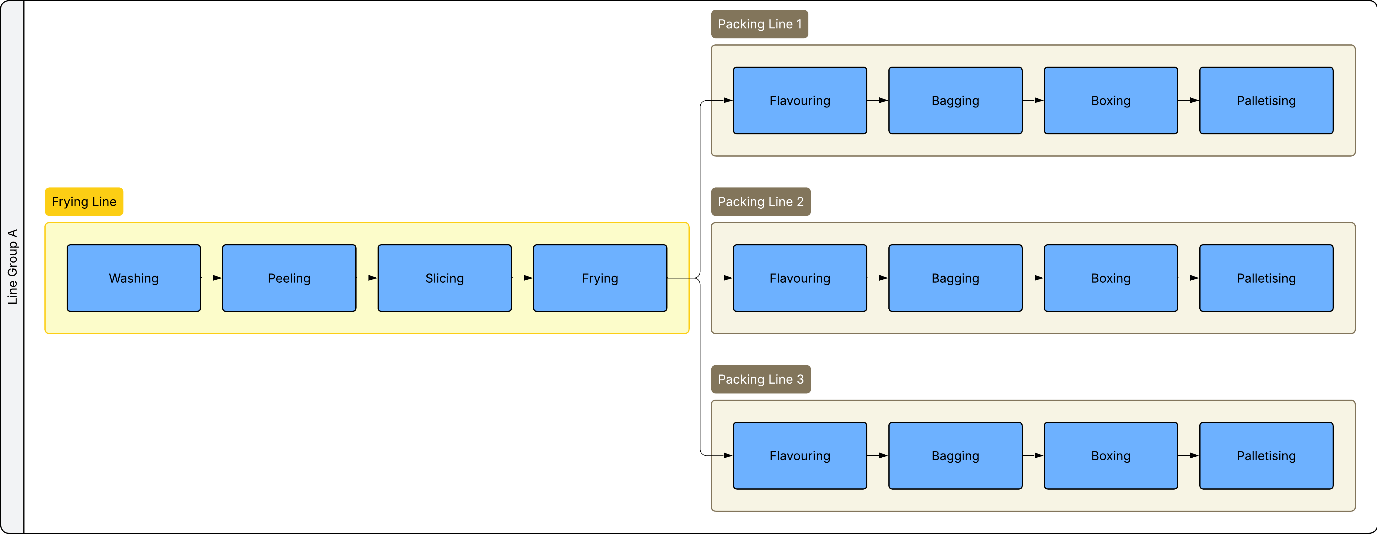
From a manufacturing perspective:
- The production lines operate together as part of a unified process.
- When assessing OEE and other KPIs:
- The combined performance of all lines is considered
- Performance of individual lines is less important when viewed separately
From the application perspective:
- The configuration consists of separate production lines
- Each line can execute different production orders and production runs
- The Frying line creates semi-finished materials for the packing lines
- The packing lines can create variations, such as different flavors, bag sizes, box sizes, and pallet sizes