Time-based consumption traceability
Time-based consumption provides inferred traceability. Inventory packs for different materials are loaded into input positions on a machine. When an inventory pack is loaded, the state changes to In Use. Loading another inventory pack of the same material type into the same input position on the same machine, closes the current consumption activity and starts a new consumption period for the newly loaded inventory pack.
Output inventory packs created while input inventory packs are in the In Use state can be traced back to the consumed inventory packs based on the time relationship between material consumption and inventory creation. This is illustrated below:
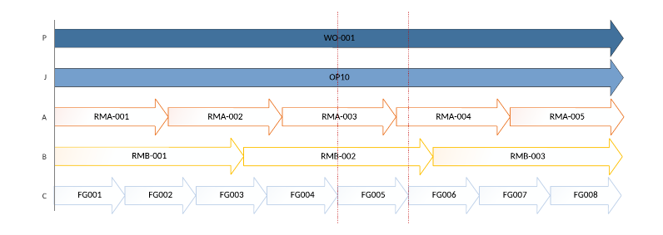
In this example:
- P = Production Order
- J = Job / Production Run
- A = Raw Material A, with different inventory packs loaded over time
- B = Raw Material B, different inventory packs loaded over time
- C = Finished Goods, with inventory packs created over time
When inventory pack FG005 is created, the line is consumes RMA-003 followed by RMA-004 for material A, and RMB-002 for material B. The application uses this information to establish the traceability between the created inventory pack and consumed materials.
In manufacturing operations, there can be a delay between input and output. The traceability report in the application can look back with a configurable delay, to account for the delay. In this example, the consumed Material A might be traced only to RMA-003, or, if a larger delay exists, to both RMA-003 and RMA-002. The exact relationship cannot always be determined with certainty. However, time-based consumption significantly narrows the range of possible source inventory packs and provides the highest level of traceability available for this consumption method.