Stop Classes
Stop Classes identify the nature of machine stoppage within a production line and help determine the machine affected when multiple machines are involved. Every reason for a machine to stop is associated with a specific stop class.
These stop classes are available:
- Stop: The machine has stopped for a legitimate reason.
- Blocked: The material cannot pass through this machine because a subsequent machine has stopped.
- Starved: The material is not reaching the machine because the preceding machine has stopped.
- Unknown: When machine stops are recorded by PLCs in some scenarios, the reason for the stop can remain unknown. This indicates that the stop classification is also unclear. However, if the operator provides an explanation for the machine stop, the reason and the classification become identified.
If a machine on the line stops for a valid reason, these issues can arise:
- Machines downstream of the stopped machine can be starved due to lack of incoming material, causing them to stop.
- Machines upstream that are currently processing materials can become blocked if the materials cannot move to the next stage, which can also lead to a halt in operations.
Blocked and starved conditions originate from the root cause machine, which is the first machine that stops. Eventually, these conditions can propagate throughout the production line, impacting the upstream and downstream machines.
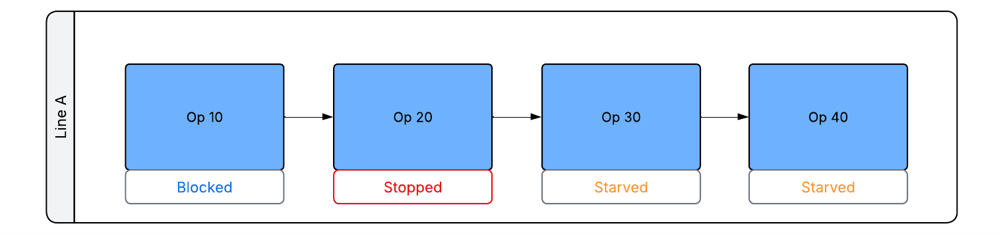
If buffers exist between machines, the production line can operate longer without causing blockage or starvation of the machines. However, if the root cause machine remains blocked for an extended period, eventually all machines in the production line get affected.
If the bottleneck machine frequently becomes blocked or experiences starvation, then MES reports can help identify the underlying cause. This information can assist continuous improvement teams in conducting further investigations and making necessary improvements to the root cause machine, ultimately reducing the frequency of bottleneck interruptions.